
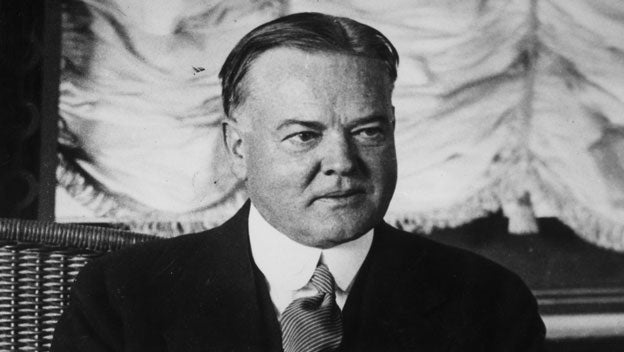
Herbert Hoover: The Great Humanitarian Turned President

juteralabs.com – Herbert Hoover, the 31st President of the United States, is often remembered for his tenure during one of the most challenging periods in American history—the Great Depression. However, Hoover’s legacy as a humanitarian and a brilliant administrator before his presidency often gets overshadowed by his presidency’s association with economic turmoil. This article explores Hoover’s life, focusing on his humanitarian efforts, his rise to prominence, his presidency, and the complexities surrounding his legacy.

Early Life and Formation of a Humanitarian Vision

Herbert Clark Hoover was born on August 10, 1874, in West Branch, Iowa, to a Quaker family. His early years were marked by hardship, including the death of both his parents by the time he was just 9 years old. Raised by relatives, Hoover learned the values of hard work, self-reliance, and a deep sense of moral duty. Despite these early setbacks, Hoover went on to attend Stanford University, where he earned a degree in geology in 1895.

The Young Geologist and Rising Star

After completing his education, Hoover embarked on a successful career in mining engineering. His work took him to far-flung parts of the globe, including China, Australia, and Africa, where he gained a reputation as a highly skilled and innovative geologist. By the age of 40, Hoover was a wealthy man, thanks to his successful mining ventures, but his career was just beginning to take a different turn.

Entering the Humanitarian World

Hoover’s rise to global prominence as a humanitarian began in 1914, when World War I broke out. Despite being a private citizen, Hoover used his wealth, connections, and organizational skills to assist in one of the most ambitious relief efforts the world had seen. His initial involvement was in organizing the repatriation of Americans stranded in Europe at the outbreak of the war.

However, Hoover’s most remarkable humanitarian achievement came when he headed the Commission for Relief in Belgium. After Germany invaded Belgium, the country faced widespread starvation. Hoover’s organization raised funds and organized shipments of food to feed millions of Belgians, saving countless lives. Hoover’s actions earned him international recognition, including the gratitude of the Belgian people, who honored him with the title of “The Great Humanitarian.”

The Humanitarian to the Public Servant

After the war, Hoover’s reputation as a humanitarian and administrator only grew. He was appointed as the head of the American Relief Administration (ARA), which was tasked with providing food and aid to war-torn Europe. In total, the ARA fed more than 20 million people across Europe, including in countries such as Poland, Austria, and Germany. Hoover’s careful management of these relief efforts established him as one of the world’s leading figures in international humanitarian work.

Shaping U.S. Government Policy

Hoover’s success in humanitarian aid caught the attention of the U.S. government. He was appointed as Secretary of Commerce under President Warren G. Harding in 1921 and later served under President Calvin Coolidge. As Secretary of Commerce, Hoover pushed for policies that supported business, innovation, and cooperation between industry and government.

He advocated for the creation of public-private partnerships to improve infrastructure, promote scientific research, and expand the U.S. economy. His most notable achievement in this period was the establishment of the Federal Radio Commission, which helped organize the fledgling radio industry into a more structured, regulated sector.

Hoover’s focus on modernization and efficiency also led to significant changes in the way the U.S. government operated, laying the groundwork for future reforms. His pragmatic approach to governance and his belief in the power of self-reliance and voluntary cooperation made him a popular figure during the 1920s.

Hoover as President: The Great Depression and Its Challenges

Herbert Hoover’s presidential campaign in 1928 was built on a platform of prosperity, promising that the United States had entered a new era of stability and success. Hoover, a man accustomed to managing crises, was confident that the nation was poised for further economic growth. However, barely eight months into his presidency, the stock market crash of 1929 ushered in the Great Depression.

The Stock Market Crash of 1929

On October 29, 1929, known as Black Tuesday, the U.S. stock market collapsed, sending the nation into an economic spiral that would last for over a decade. Hoover, despite his reputation as a pragmatic and skilled administrator, found himself facing an unprecedented economic collapse. Unemployment skyrocketed, banks failed, and millions of Americans faced poverty, hunger, and homelessness.

Hoover initially believed that the economy would naturally recover, and that government intervention should be minimal. He was a firm believer in the power of individual initiative and the importance of maintaining the nation’s self-reliance. Hoover opposed direct federal relief to the unemployed, instead preferring to encourage local and state efforts to assist those in need. However, as the depression deepened, it became clear that his approach was not enough to stem the tide of suffering.

Hoover’s Response to the Crisis

As the Great Depression worsened, Hoover’s administration attempted a number of interventions to stabilize the economy. He called for public works programs, including the construction of the Hoover Dam, which created jobs and helped to provide much-needed infrastructure for the American West. Hoover also supported the creation of the Reconstruction Finance Corporation (RFC) in 1932, which provided loans to banks, businesses, and state governments in an attempt to stimulate economic activity.

Despite these efforts, Hoover’s policies were widely criticized for being too little, too late. The public blamed him for failing to adequately address the economic crisis, leading to widespread dissatisfaction with his leadership. The election of 1932, in which Hoover was defeated in a landslide by Franklin D. Roosevelt, marked the end of his political career.

Hoover’s Post-Presidency: A Return to Humanitarian Work

After his presidency, Hoover largely withdrew from the political spotlight. However, his commitment to humanitarian causes never waned. During World War II, Hoover returned to his roots, organizing relief efforts for war-torn Europe once again. He helped to provide food and medical aid to millions of people suffering from the effects of the war. Hoover also worked on various commissions, including the Hoover Commission, which aimed to streamline and reform the U.S. government.

Despite his controversial presidency, Hoover’s post-presidential years allowed him to rebuild his reputation as a compassionate and committed humanitarian. He remained active in public life, writing books, giving speeches, and contributing to global relief efforts until his death in 1964.

Legacy: The Great Humanitarian Turned President

Herbert Hoover’s legacy is a complex one. On one hand, his presidency is often associated with the Great Depression and economic failure. On the other, his humanitarian work before and after his presidency earned him the respect of many. Hoover’s earlier efforts to save lives in Europe during and after World War I, his advocacy for international cooperation, and his belief in the power of self-reliance and individual responsibility continue to shape his legacy.

Although his presidency was marred by economic crisis, Hoover’s dedication to improving the lives of others through his humanitarian work remains a key aspect of his life’s story. Today, historians recognize Hoover not just as a president, but as “The Great Humanitarian” who worked tirelessly for the betterment of humanity long before and after his time in the Oval Office.

Conclusion

Herbert Hoover’s life story is one of contrasts and contradictions. From a mining engineer and successful businessman to a humanitarian hero and president during the Great Depression, Hoover’s journey was marked by both triumph and tragedy. His contributions to global relief efforts, his dedication to public service, and his tireless commitment to improving the world around him ensure that his legacy as a humanitarian will never be forgotten. Despite the economic challenges of his presidency, Hoover’s commitment to improving the human condition stands as one of his most enduring accomplishments.
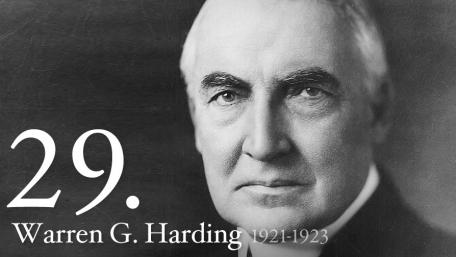
Warren G. Harding: The 29th President’s Legacy

juteralabs.com – Warren Gamaliel Harding, the 29th President of the United States, held office from 1921 until his untimely death in 1923. Although his presidency was short-lived, Harding’s time in office was marked by significant events that left a complex legacy, influencing both domestic and foreign policies. From economic growth to political scandals, Harding’s presidency remains one of the most debated in American history.

Early Life and Political Rise

Childhood and Education

Warren G. Harding was born on November 2, 1865, in Blooming Grove, Ohio. He came from a modest background, his father being a physician and farmer. Harding attended Ohio Central College, where he was an average student. His early life was marked by a series of modest jobs, including working in a printing office. This experience led him to develop a deep interest in journalism, ultimately becoming the owner of the Marion Daily Star in 1884. Harding’s time in the media world helped him build a network of political contacts that would prove useful later in life.

Entry into Politics

Harding’s foray into politics began with his election to the Ohio State Senate in 1900. His political career flourished through a series of local positions, including a brief tenure as Lieutenant Governor of Ohio from 1904 to 1906. He was known as a moderate and pragmatic politician, which helped him garner support across party lines. However, it was his election to the U.S. Senate in 1914 that truly marked his rise on the national stage.

In 1920, Harding ran for president as the Republican candidate. His campaign was characterized by a promise of a “return to normalcy,” a call for a retreat from the tumultuous years of World War I and the progressive reforms that had shaped the previous decade. Harding’s message resonated with a war-weary America, and he won the presidency in a landslide victory.

The Harding Administration

Economic Policies: A Return to Prosperity

Upon assuming office, Harding focused on implementing policies that were designed to restore prosperity to a post-war America. A key aspect of his economic agenda was tax cuts for individuals and corporations. Harding believed that reducing taxes would stimulate economic growth by providing businesses with more capital to invest and expand. His administration worked closely with Congress to pass the Revenue Act of 1921, which significantly reduced the top income tax rate from 73% to 58%.

In addition to tax cuts, Harding’s administration implemented policies designed to reduce government spending and balance the federal budget. Harding was committed to lowering the national debt, and during his tenure, the federal budget saw a surplus for the first time in years. The result of these economic policies was a period of rapid economic growth and prosperity in the United States, laying the foundation for the “Roaring Twenties.”

Foreign Policy: Isolationism and Diplomacy

Harding’s foreign policy was characterized by a return to isolationism, reflecting the sentiment of many Americans after the hardships of World War I. The president focused on promoting peace and stability without becoming entangled in European conflicts. One of Harding’s key achievements in foreign policy was the Washington Naval Conference of 1921-1922, which aimed to reduce the naval arms race among the world’s major powers.

The Washington Naval Conference resulted in agreements that limited the construction of battleships and aircraft carriers, as well as the establishment of a ratio for naval armament among the United States, the United Kingdom, Japan, France, and Italy. Harding’s administration also played a role in the negotiation of the Kellogg-Briand Pact of 1928, which sought to outlaw war as a means of resolving disputes. Although these diplomatic efforts were seen as successes, Harding’s emphasis on isolationism did not prevent the world from eventually slipping back into international tensions that would lead to World War II.

The Teapot Dome Scandal: A Dark Chapter

While Harding’s administration had notable achievements, it was also marred by the infamous Teapot Dome scandal, which continues to tarnish his legacy. The scandal involved the secret leasing of federal oil reserves at Teapot Dome, Wyoming, and Elk Hills, California, to private companies without competitive bidding. Albert Fall, Harding’s Secretary of the Interior, was found to have accepted bribes from these companies in exchange for the leases.

The Teapot Dome scandal rocked the Harding administration, and it raised serious questions about corruption and the extent to which Harding’s cabinet was involved in illegal activities. Although Harding was not directly implicated in the scandal, his failure to address the issue effectively and his choice of corrupt officials for key positions in his administration significantly damaged his reputation.

Harding’s Legacy

A Mixed Legacy

Warren G. Harding’s presidency remains one of the most complex in U.S. history. His policies of economic conservatism and isolationism left a mark on the country, particularly in terms of fiscal policy and international diplomacy. Under Harding, the U.S. experienced an economic boom, a reduction in taxes, and a commitment to reducing government interference in the economy. These policies, often associated with the “laissez-faire” economic philosophy, paved the way for the prosperity of the 1920s.

However, Harding’s legacy is also clouded by scandals and ethical questions. The Teapot Dome scandal, in particular, casts a long shadow over his presidency, contributing to a perception of incompetence and corruption in his administration. The president’s untimely death in 1923, at the age of 57, left many questions unanswered, leaving historians to debate how his presidency would have unfolded had he served a full term.

Harding’s Influence on Future Presidents

Despite his relatively low approval during his lifetime, Harding’s policies set the stage for future administrations. His economic principles were embraced by Republican presidents in the years following his death, particularly Herbert Hoover, who succeeded him in 1929. Hoover’s policies, although ultimately unsuccessful during the Great Depression, were built upon the framework that Harding had established.

Additionally, Harding’s approach to foreign policy—emphasizing diplomacy over military engagement—left an enduring influence on U.S. foreign relations. His emphasis on disarmament and international cooperation would continue to be echoed in U.S. policies throughout the 20th century.

Conclusion

Warren G. Harding’s legacy is a paradox, marked by both significant accomplishments and deeply troubling scandals. His presidency, short as it was, demonstrated the potential for economic growth through conservative fiscal policies and a restrained foreign policy approach. Yet, the scandals that marred his administration, particularly the Teapot Dome affair, have left an indelible mark on the historical record.

In the end, Harding’s legacy is one of contradictions—he was a man who ushered in a period of prosperity but whose administration was ultimately brought down by corruption. As such, he remains a figure in American history whose presidency continues to inspire both admiration for his policy achievements and criticism for his lack of leadership in the face of scandal.

William Howard Taft: Only President to Also Serve as Chief Justice

juteralabs.com – William Howard Taft holds a unique place in American history as the only person to have served as both the President of the United States and as the Chief Justice of the United States Supreme Court. His career spanned several high-profile roles, and his leadership shaped both the executive and judicial branches of the U.S. government. In this article, we will explore Taft’s remarkable life, his tenure as both president and chief justice, and his lasting legacy in American politics and law.

Early Life and Education

Childhood and Family Background

William Howard Taft was born on September 15, 1857, in Cincinnati, Ohio. He came from a prominent family with a rich political history. His father, Alphonso Taft, was a lawyer and politician who had served as a U.S. Attorney General and Secretary of War under President Ulysses S. Grant. This environment of political and legal influence greatly shaped William’s early life.

Taft attended Yale University, where he excelled academically, particularly in law. After graduating in 1878, he went on to study law at the University of Cincinnati College of Law, where he earned his degree in 1880. Taft’s education in both legal and political affairs laid the groundwork for his future roles in American government.

Political Rise and Presidency

Early Political Career

After completing his education, Taft began his legal career, but he quickly transitioned into politics. He was appointed as a judge of the Superior Court of Ohio in 1887, a position that introduced him to the workings of the judicial system. His legal expertise soon caught the attention of national leaders, and he was appointed to various high-profile roles in government. In 1904, President Theodore Roosevelt appointed Taft as the Governor-General of the Philippines, where he oversaw the administration of the U.S. territories.

Taft’s tenure in the Philippines was marked by his progressive reforms, which included improving education and infrastructure and helping to stabilize the region. His successful administration in the Philippines earned him a reputation as a skilled and capable leader.

Presidency: 1909-1913

In 1908, Taft was elected as the 27th President of the United States, succeeding Theodore Roosevelt. As a candidate, Taft ran on a platform of continuing Roosevelt’s progressive policies, but once in office, he quickly developed his own approach to governance.

Taft’s presidency was marked by his efforts to regulate big business and trust monopolies. One of his most notable achievements was the establishment of the Bureau of Mines, which worked to oversee and regulate the mining industry. He also pursued the antitrust policies Roosevelt had championed, taking legal action against companies like Standard Oil.

However, his presidency was not without its controversies. While Taft continued many of Roosevelt’s progressive policies, he was more conservative in some areas, particularly regarding tariff reform. His decision to sign the Payne-Aldrich Tariff, which raised tariffs on many goods, angered progressive members of his party and led to a rift with Theodore Roosevelt.

The political divisions within the Republican Party deepened during his presidency, leading to a bitter split in the party in 1912. Roosevelt challenged Taft for the Republican nomination, and the ensuing fight between the two men severely weakened the party. Roosevelt’s subsequent third-party candidacy, under the Progressive Party banner, further divided Republican support, leading to the election of Democrat Woodrow Wilson.

Although Taft’s presidency was cut short after one term, his time in office had a lasting impact on both American politics and the legal system.

Chief Justice of the Supreme Court

Transition to the Judiciary

After losing the presidency in 1912, Taft was not done with public service. In 1921, President Warren G. Harding nominated Taft to serve as Chief Justice of the United States Supreme Court, a position that Taft eagerly accepted. Taft’s appointment to the Supreme Court marked the beginning of a new chapter in his distinguished career, and he would go on to serve as Chief Justice until his retirement in 1930.

Taft was a passionate advocate for judicial reform, and he took the role of Chief Justice very seriously. He saw the position as an opportunity to reshape the judicial system and make it more efficient. One of his major achievements was overseeing the construction of a new Supreme Court building, which was completed in 1935, five years after his departure.

Legal Contributions and Legacy

As Chief Justice, Taft was known for his conservative legal philosophy and his commitment to ensuring that the judicial branch remained independent from political pressures. He played an important role in several landmark Supreme Court decisions, including cases related to labor rights, federalism, and constitutional interpretation.

Taft’s greatest contribution as Chief Justice was his advocacy for the expansion and modernization of the federal judiciary. Under his leadership, the Supreme Court became more efficient, with significant improvements in the organization of the court system. He also advocated for the appointment of more federal judges to reduce the backlog of cases in lower courts.

Despite his conservative leanings, Taft believed in the importance of judicial independence and the separation of powers between the executive, legislative, and judicial branches. His leadership helped solidify the role of the judiciary as an equal branch of government, with the ability to provide checks on the other branches’ actions.

A Unique Historical Legacy

William Howard Taft’s appointment to the Supreme Court was groundbreaking not only because of his legal expertise but because of the rarity of a president transitioning to the judiciary. He remains the only U.S. president to have held the office of Chief Justice, making his legacy a testament to his versatile career in public service.

Conclusion: The Enduring Influence of Taft’s Career

William Howard Taft’s dual service as both President and Chief Justice underscores his deep commitment to public service and his profound understanding of the U.S. government. His presidency, though marked by political challenges, left a lasting legacy in progressive reforms and trust-busting policies. However, it was in his post-presidential role as Chief Justice where Taft truly made his mark, transforming the judicial system and solidifying the role of the courts in American democracy.

Taft’s story is one of ambition, leadership, and a deep-seated belief in the American constitutional system. Whether as a president or a judge, his impact on the United States remains significant, and his place in history as the only person to hold both offices continues to make him a figure of great interest and admiration in the annals of American history.

James A. Garfield: The Scholar-President

juteralabs.com – James A. Garfield, the 20th President of the United States, is often remembered for his tragic assassination, which cut short what seemed to be a promising political career. However, Garfield’s life was marked by much more than just his presidency. He was a man of deep intellect, exceptional academic achievements, and a profound dedication to education. A man of both action and thought, Garfield was often referred to as the “Scholar-President” due to his remarkable scholarly background, which set him apart from many other political leaders of his time. This article delves into the intellectual life of James A. Garfield, exploring his education, his scholarly contributions, and how his background as a scholar influenced his political career and presidency.

Early Life and Education

Childhood and Family Background

James Abram Garfield was born on November 19, 1831, in a log cabin in Orange Township, Ohio. He was the youngest of five children in a poor family. Garfield’s father, Abram Garfield, died when James was only two years old, leaving his mother, Eliza, to raise him and his siblings. Despite the financial hardships, Eliza was determined to provide her children with an education, and she encouraged them to read and learn.

From a young age, Garfield showed signs of being an exceptionally bright and curious child. His early education was largely informal, shaped by his mother’s efforts to instill a love for reading and learning. As a result, Garfield developed a passion for knowledge and an enduring desire to better himself through education.

Formal Education at Williams College

Garfield’s formal education began at the Western Reserve Eclectic Institute in Hiram, Ohio, where he worked as both a student and a teacher. It was during this time that Garfield’s intellect began to shine, attracting the attention of both peers and educators. However, it was his later enrollment at Williams College in Massachusetts that would cement his academic legacy.

In 1854, Garfield entered Williams College as a sophomore, quickly distinguishing himself as a gifted scholar. He excelled in a variety of subjects, including Greek, Latin, history, mathematics, and philosophy. He was particularly noted for his love of classical studies, and his grasp of Greek and Latin was considered exceptional. Garfield’s academic prowess earned him the respect of both his professors and fellow students, and he graduated in 1856 with top honors.

Scholarly Contributions and Intellectual Development

Classical Studies and the Pursuit of Knowledge

Garfield’s education was deeply influenced by classical studies. He became fluent in both Greek and Latin, which allowed him to read the works of ancient philosophers and historians in their original languages. His academic interests were not limited to the classics; he also pursued studies in theology, history, and the natural sciences.

While at Williams College, Garfield developed a strong interest in philosophy and logic. He was especially captivated by the works of Plato and Aristotle, which influenced his later approach to political theory. Garfield believed that education should foster critical thinking and intellectual growth, and he carried this belief with him throughout his life. His scholarly pursuits were not merely academic; they were part of a broader philosophy of self-improvement and intellectual engagement.

Contributions to the Field of Education

Garfield’s passion for education was not confined to his personal academic achievements. He was deeply committed to advancing educational opportunities for others. After graduating from Williams College, Garfield returned to Ohio and accepted a teaching position at the Western Reserve Eclectic Institute (later known as Hiram College). He taught a wide range of subjects, including Greek, Latin, and mathematics, and his reputation as an educator quickly grew.

As a teacher, Garfield was known for his rigorous academic standards and his ability to inspire his students. He believed in the transformative power of education and sought to cultivate not only intellectual skills but also moral character. Garfield’s approach to teaching emphasized the importance of discipline, hard work, and the pursuit of truth. His dedication to education extended beyond the classroom as well; he worked to improve the educational system in Ohio and supported efforts to make education more accessible to the wider population.

Garfield’s Political Career and Intellectual Legacy

The Scholar’s Approach to Politics

Garfield’s scholarly background played a significant role in shaping his approach to politics. He entered politics at a time when intellectual rigor and moral integrity were seen as crucial qualities for a leader. Garfield’s ability to approach political issues with a thoughtful, logical perspective set him apart from many of his contemporaries. He was known for his careful consideration of policy decisions, often taking a scholarly approach to analyzing the facts before arriving at a conclusion.

Garfield’s education also gave him a unique perspective on issues such as civil rights, economic policy, and international relations. He was a strong advocate for the rights of African Americans and believed in the importance of education as a means of achieving equality and social mobility. His support for the education of African Americans was a direct reflection of his own belief in the power of knowledge to transform lives.

Presidency: A Short-Lived Opportunity to Implement His Vision

Garfield’s political career culminated in his election to the presidency in 1880. Although his time in office was tragically short—Garfield was shot by an assassin’s bullet just six months into his term—his presidency demonstrated his commitment to using his intellect to guide national policy.

As president, Garfield sought to reform the civil service system, advocating for merit-based appointments rather than the patronage system that had dominated American politics for decades. His push for civil service reform was rooted in his belief in the importance of competence and integrity in government. Garfield’s emphasis on meritocracy reflected his scholarly values, as he believed that intellectual ability and hard work should be the primary criteria for success in both education and government.

Garfield’s Intellectual Legacy

James A. Garfield’s legacy as a scholar is perhaps best exemplified by his approach to leadership. He believed that education and intellectual achievement were the cornerstones of a successful and just society. Garfield’s life and career stand as a testament to the value of education in shaping not only individual success but also national progress.

While Garfield’s presidency was cut short, his intellectual contributions have had a lasting impact on American politics and education. His commitment to education and civil service reform set a powerful example for future generations of leaders. Garfield’s scholarly approach to both politics and life continues to inspire those who believe in the transformative power of knowledge.

Conclusion: A Legacy of Thought and Action

James A. Garfield’s life serves as a reminder that true leadership is not only about power and influence but also about the pursuit of knowledge, the commitment to education, and the application of intellect to real-world challenges. Garfield was not just a political figure; he was a scholar who believed in the power of education to improve individuals and society. His legacy as the “Scholar-President” is a testament to the enduring value of education and intellectual curiosity in shaping the future of a nation.

John Tyler: The Accidental President – Early Life

juteralabs.com – John Tyler, the 10th president of the United States, is often referred to as the “accidental president” because of the unexpected circumstances that led to his rise to the presidency. Tyler was not elected to the highest office in the land but rather assumed the role after the sudden death of President William Henry Harrison, who served only 31 days in office. His presidency was filled with controversies and challenges, and his time in office left a significant mark on the country, despite his unconventional path to power.

In this article, we will explore the life of John Tyler, the events that led to his presidency, the challenges he faced while in office, and the lasting legacy of his time in the White House.

Early Life and Political Beginnings

John Tyler was born on March 29, 1790, in Charles City County, Virginia, into a well-established and politically connected family. His father, John Tyler Sr., was a prominent Virginia planter and a governor of the state. Tyler was educated at the College of William and Mary, where he showed a keen interest in government and law. By the age of 21, Tyler had earned his law degree and started practicing law in Virginia.

Tyler’s early political career began when he was elected to the Virginia House of Delegates in 1811, and he quickly became known for his strong stance on states’ rights and his advocacy for the Constitution. He served in the Virginia legislature for many years, gradually gaining prominence within the state’s political circles.

In 1816, Tyler was elected to the U.S. House of Representatives as a member of the Democratic-Republican Party. Over time, his political views evolved, and by the 1820s, he became a strong supporter of the Democratic Party, aligning himself with figures like Andrew Jackson. However, Tyler’s commitment to states’ rights and his opposition to certain federal policies led him to eventually distance himself from Jackson and the Democrats, aligning with the Whig Party by the 1830s.

Tyler’s Rise to the Presidency

John Tyler’s journey to the presidency was anything but typical. In 1840, he was selected as the vice-presidential candidate on the Whig ticket alongside presidential candidate William Henry Harrison, who was a popular military hero. The Whigs hoped to capitalize on Harrison’s fame and the public’s desire for a change after the presidency of Martin Van Buren. Harrison won the election, and Tyler became the vice president.

However, just a month after Harrison’s inauguration on March 4, 1841, tragedy struck. President Harrison fell ill with pneumonia and died on April 4, 1841, just 31 days into his presidency. The death of Harrison left Tyler to assume the role of president under the U.S. Constitution, which had no precedent for the transfer of power from one president to the next in such circumstances.

Although some of Harrison’s advisors initially questioned whether Tyler should assume the full powers of the presidency, Tyler insisted on his right to do so, claiming that he was the “constitutional president” of the United States. In a moment of historical significance, Tyler took the oath of office on April 6, 1841, thereby becoming the 10th president of the United States.

Tyler’s Presidency: Challenges and Controversies

Tyler’s presidency was marked by significant challenges. As a man who had been thrust into the role of president without the mandate of an election, Tyler found himself at odds with the Whig Party that had nominated him. Tyler’s relationship with the Whigs was rocky from the start, especially because of his strict adherence to the principles of states’ rights and his vetoes of certain legislative measures that the Whigs supported.

The Bank of the United States Controversy

One of the earliest and most notable controversies of Tyler’s presidency involved the re-chartering of the Second Bank of the United States. The Whigs, led by figures like Henry Clay, were strong proponents of a national bank, believing it was crucial for stabilizing the economy. However, Tyler, a staunch states’ rights advocate, vetoed the bank’s recharter, which led to a deep divide between him and the Whigs.

Tyler’s veto of the bank bill angered many in his party, and in response, the Whigs expelled him from their party in 1841. This left Tyler without a strong political affiliation and led to a period of instability in his administration. Despite being abandoned by the Whigs, Tyler remained resolute in his views on government and continued to push for policies that aligned with his beliefs in states’ rights and limited federal power.

Foreign Affairs and the Annexation of Texas

While Tyler’s presidency was marked by domestic political struggles, he also faced important foreign policy decisions. One of the most significant achievements of his presidency was his role in the annexation of Texas. The territory of Texas had declared independence from Mexico in 1836, and by the early 1840s, many Americans were in favor of admitting Texas as a state.

Tyler, despite his lack of political support, pushed for the annexation of Texas, seeing it as a way to expand the United States and strengthen its position in the western hemisphere. After months of negotiations and political maneuvering, Tyler succeeded in bringing Texas into the Union just before he left office. In 1845, Congress passed a joint resolution for the annexation of Texas, and the territory officially became a state under President James K. Polk, who succeeded Tyler.

The Webster-Ashburton Treaty

Another significant foreign policy achievement during Tyler’s presidency was the Webster-Ashburton Treaty of 1842, which resolved border disputes between the United States and British Canada. The treaty helped to define the boundaries of the U.S. and Canada, especially in the northeastern part of the country. It also addressed issues related to the suppression of the slave trade and the extradition of criminals between the two nations.

This treaty was viewed as a diplomatic success for Tyler, and it improved relations between the United States and Great Britain during a time of heightened tension.

The End of Tyler’s Presidency

Tyler’s time in office was marked by his lack of political support and his struggles to navigate the delicate balance between his personal beliefs and the demands of his party. He left office in 1845 after serving one term, the only president to be expelled from his party during his time in office. Despite his controversial presidency, Tyler’s political influence did not end with the conclusion of his presidency.

After leaving the White House, Tyler retired to his plantation in Virginia, but he remained active in political life. He supported the South’s cause during the Civil War and even served as a delegate to the Virginia Secession Convention. He was later elected to the Confederate Congress but died in 1862 before he could take office.

Legacy of John Tyler

John Tyler’s presidency may not have been as politically successful as some of his predecessors, but it is nonetheless significant in American history. Tyler was the first vice president to assume the presidency upon the death of a sitting president, setting a precedent for future successions.

His controversial policies and frequent clashes with the Whig Party showed that a president could maintain principles even in the face of political opposition. His actions, particularly in relation to the annexation of Texas and foreign diplomacy, helped shape the future direction of the nation, especially with regard to the expansion of the United States.

Although often overlooked by history, John Tyler’s presidency was an important period in the evolution of the U.S. political system. He navigated complex political dynamics and played a key role in shaping the future of the country during a time of uncertainty.

Conclusion

John Tyler’s presidency is a fascinating chapter in American history. His rise to power was unexpected, and his time in office was marked by struggles with political parties, internal divisions, and diplomatic challenges. However, despite these obstacles, Tyler’s role in annexing Texas and his diplomatic achievements were pivotal in shaping the nation’s trajectory.

Tyler’s legacy as the “accidental president” endures, reminding us of the complexities of American politics and the unpredictable nature of history. His presidency, though often overshadowed by other figures in U.S. history, was an essential part of the story of America’s expansion and political evolution.

Martin Van Buren: The Eighth President of the United States

juteralabs.com – Martin Van Buren, the eighth President of the United States, served from 1837 to 1841. His presidency was shaped by a variety of economic challenges and political tensions, but his career in public service went far beyond his term in the White House. As one of the key architects of the Democratic Party, Van Buren played an instrumental role in shaping early American political culture. Known for his political shrewdness, organizational skills, and devotion to party politics, Van Buren’s legacy is both complex and significant in the context of U.S. history.

Early Life and Career

Birth and Family Background

Martin Van Buren was born on December 5, 1782, in Kinderhook, New York. He came from a Dutch-American family and grew up speaking Dutch as his first language. His father, Abraham Van Buren, was a farmer and tavern keeper, while his mother, Maria Hoes Van Buren, was of modest means. This humble upbringing helped shape Van Buren’s populist appeal later in life, as he often portrayed himself as a man of the people.

Legal and Political Beginnings

Van Buren’s formal education was limited, but he was ambitious and driven. He began studying law at the age of 14, apprenticing under prominent lawyers before being admitted to the bar in 1803. He quickly gained a reputation as a skilled lawyer and became involved in New York politics. Van Buren aligned himself with the Democratic-Republican Party, which would eventually evolve into the Democratic Party.

In 1812, Van Buren was elected to the New York State Senate, where he became a prominent figure in state politics. He established himself as a master of political organization and was deeply involved in building a powerful political machine known as the “Albany Regency,” which controlled much of New York politics.

National Political Rise

Van Buren’s national political career began in earnest when he was elected to the United States Senate in 1821. During his time in the Senate, he became a strong advocate for states’ rights and limited government, positions that would later define his political philosophy. His ability to navigate the complexities of national politics earned him the respect of fellow politicians, and he quickly became a key player in the Democratic-Republican Party.

Role in the Jacksonian Era

Partnership with Andrew Jackson

Martin Van Buren’s close association with Andrew Jackson was one of the defining features of his political career. Van Buren played a crucial role in helping Jackson win the presidency in 1828, and he became Jackson’s most trusted adviser during his administration. As Jackson’s Secretary of State and later Vice President, Van Buren was deeply involved in shaping the policies of the Jackson administration, particularly those related to the economy and states’ rights.

The Formation of the Democratic Party

One of Van Buren’s most lasting contributions to American politics was his role in the formation of the Democratic Party. He recognized the need for a strong, unified political party that could mobilize voters and support candidates who championed the principles of Jacksonian democracy, such as limited government, opposition to a national bank, and support for westward expansion. His organizational skills and political acumen helped create a party structure that would dominate American politics for decades.

The Presidency of Martin Van Buren

Election of 1836

In 1836, Van Buren was elected as the eighth President of the United States, succeeding Andrew Jackson. He won the election largely due to his close association with Jackson and his support from the Democratic Party. Van Buren’s presidency, however, was immediately faced with significant challenges.

Economic Crisis: The Panic of 1837

The most defining event of Van Buren’s presidency was the Panic of 1837, a severe economic depression that began shortly after he took office. The panic was triggered by a variety of factors, including the collapse of speculative land markets, the failure of banks, and the withdrawal of British investments from the U.S. economy.

Van Buren’s response to the crisis was grounded in his belief in limited government intervention. He refused to involve the federal government in direct economic relief efforts, arguing that such actions would undermine the principles of a free market economy. Instead, he focused on maintaining fiscal discipline and promoting the establishment of an independent treasury system to separate government funds from private banks. While his policies may have helped stabilize the economy in the long term, they were deeply unpopular at the time and contributed to his political downfall.

Slavery and Sectional Tensions

During Van Buren’s presidency, the issue of slavery continued to divide the nation. Van Buren, like many Northern Democrats, sought to maintain a delicate balance between pro-slavery and anti-slavery factions within the party. He supported the institution of slavery in states where it already existed but opposed its expansion into new territories. His cautious stance on the issue allowed him to maintain the support of Southern Democrats, but it also alienated some Northern abolitionists.

Foreign Policy and the Canadian Rebellion

Van Buren’s foreign policy was largely focused on maintaining peace and stability in North America. One of the most significant events during his presidency was the Canadian Rebellion of 1837, in which Canadian rebels sought independence from British rule. Van Buren took a neutral stance, working to prevent American involvement in the conflict and maintaining diplomatic relations with Britain. His careful handling of the situation helped avoid a broader conflict but did little to boost his popularity at home.

Post-Presidency and Legacy

Election of 1840: Defeat and the Whig Victory

In the election of 1840, Van Buren sought re-election but was defeated by the Whig Party candidate, William Henry Harrison. The economic difficulties caused by the Panic of 1837 and Van Buren’s perceived inaction during the crisis were major factors in his loss. Harrison’s campaign, characterized by the famous “Log Cabin and Hard Cider” image, portrayed Van Buren as an out-of-touch aristocrat, while Harrison was marketed as a man of the people.

Later Years and the Free Soil Party

After leaving office, Van Buren remained active in politics. In 1848, he became the presidential candidate for the Free Soil Party, a political group that opposed the expansion of slavery into new territories. While he did not win the election, his candidacy helped draw attention to the growing tensions over slavery, which would eventually lead to the Civil War.

Legacy

Martin Van Buren’s legacy is often overshadowed by the economic challenges of his presidency and his defeat in the election of 1840. However, his contributions to American political culture, particularly his role in shaping the Democratic Party and modern party politics, are significant. Van Buren’s commitment to party organization and his belief in the importance of political institutions helped create a more structured and effective political system in the United States.

Conclusion

Martin Van Buren’s life and career reflect the complexities of early American politics. As the eighth President of the United States, he faced significant challenges, particularly the economic crisis of the Panic of 1837, which ultimately undermined his political support. However, his contributions to the development of the Democratic Party and his role as a key figure in the Jacksonian era ensure that he remains an important figure in American history.

Van Buren’s legacy as a political organizer and strategist helped shape the future of American politics, and his efforts to balance the competing interests of the North and South on the issue of slavery illustrate the difficult position many politicians faced during this period. Though his presidency was marked by hardship, Van Buren’s influence on the political landscape of the United States continues to be felt today.