The French Dispatch: Directed by Wes Anderson

juteralabs.com – Wes Anderson, one of the most distinctive voices in contemporary cinema, has long been celebrated for his quirky, meticulously crafted films that blend humor, visual artistry, and emotional complexity. Known for his unique storytelling techniques, precise symmetry in shots, and offbeat characters, Anderson’s films have developed a cult following that appreciates his distinct aesthetic and narrative style. His 2021 film The French Dispatch further cements his reputation as one of modern cinema’s most imaginative directors. A love letter to journalism, art, and the European spirit, The French Dispatch brings together Anderson’s artistic sensibilities with his fascination for history, politics, and human connection.

In this article, we’ll explore Wes Anderson’s journey to The French Dispatch, his directorial vision for the film, the influences that shaped it, and the legacy it leaves in the world of cinema.

Wes Anderson: The Director Behind the Vision

Early Life and Career Beginnings

Wes Anderson was born on May 1, 1969, in Houston, Texas, to an advertising executive father and an archeologist mother. Growing up in a family that valued creativity, Anderson found an early interest in film, particularly in creating short films with his brothers. He studied philosophy at the University of Texas at Austin, where he began experimenting with filmmaking, eventually leading to his first short film, Bottle Rocket (1994), which marked the beginning of his career.

Bottle Rocket was Anderson’s first feature-length film, co-written with his long-time collaborator, Owen Wilson. Though it wasn’t a commercial success, it garnered enough attention to make Anderson a name to watch. This led to Rushmore (1998), a film that marked a significant turning point in his career. With Rushmore, Anderson began to develop the visual style and storytelling techniques that would define his future works—eccentric characters, symmetrical compositions, and a heightened sense of humor.

Following Rushmore, Anderson went on to direct other films that became synonymous with his style, including The Royal Tenenbaums (2001), The Life Aquatic with Steve Zissou (2004), The Darjeeling Limited (2007), and Fantastic Mr. Fox (2009). Each of these films is marked by a distinctive visual approach, precise color palettes, deadpan humor, and whimsical characters. Anderson’s films often explore themes of family, loss, and the absurdity of life, all framed within his signature style.

Anderson’s Signature Style

Wes Anderson’s films are characterized by several hallmarks that have become synonymous with his name:

  1. Visual Symmetry – Anderson is renowned for his meticulous use of symmetry in his shots. His camera often moves in a highly controlled, almost mechanical manner, ensuring that every shot looks perfectly balanced. This sense of order and precision creates a dreamlike, almost surreal atmosphere, heightening the fantastical nature of his narratives.

  2. Color Palettes – Each of Anderson’s films features a carefully curated color palette that influences the mood and tone of the story. His use of vibrant and contrasting colors helps define the aesthetic and draws viewers into his carefully constructed worlds.

  3. Character-Driven Stories – Despite the often whimsical nature of Anderson’s films, they are always deeply rooted in the personal struggles and emotional lives of their characters. Anderson’s characters are often quirky and eccentric, but their journeys reflect universal themes of identity, family, and belonging.

  4. Deadpan Humor and Dialogue – Anderson’s films are known for their dry, almost theatrical dialogue. The characters speak in a manner that feels stilted yet emotionally poignant, adding to the absurdity and charm of the situations they find themselves in.

  5. An Ensemble Cast – Anderson has a long history of working with a recurring cast of actors, including Bill Murray, Owen Wilson, Tilda Swinton, Jason Schwartzman, and more recently, Frances McDormand and Timothée Chalamet. These actors have come to embody the unique world Anderson creates and often appear in multiple films.

The French Dispatch: A Tribute to Journalism and European Art

Concept and Development

The French Dispatch is a film that serves as a tribute to the world of print journalism, specifically the journalists working for the fictional magazine The French Dispatch in a fictional French city. The film is an anthology, structured as a series of articles, each focusing on different quirky characters, stories, and themes that represent Anderson’s signature combination of humor and melancholy. The stories are framed within the final issue of The French Dispatch, which chronicles the end of an era, much like the end of print journalism itself in the digital age.

Anderson’s inspiration for the film was rooted in his long-standing admiration for European films, particularly those from France, and the notion of the artist’s struggle to create in a turbulent world. As a film that pays homage to French cinema, The French Dispatch is saturated with references to the golden age of French filmmaking, while also offering a satirical commentary on the nature of journalism and the personal sacrifices made in the name of art and storytelling.

The film is structured around the final issue of The French Dispatch magazine, following the lives of its editors and the stories they report on. It weaves multiple narratives together, each with its distinct tone and style. The stories range from a political uprising in a fictional European city to a tale of art and obsession, all told with Anderson’s signature blend of humor, visual flair, and eccentricity.

A Star-Studded Cast

True to Anderson’s tradition, The French Dispatch features an ensemble cast of some of the most talented actors working today. Bill Murray plays the magazine’s editor-in-chief, Arthur Howitzer Jr., while Frances McDormand, Timothée Chalamet, Tilda Swinton, Jeffrey Wright, and many others fill pivotal roles. The film’s star-studded cast is integral to its success, with each actor bringing their own sense of uniqueness to Anderson’s carefully crafted world.

The performances in The French Dispatch are characterized by a blend of dry humor, pathos, and offbeat charm, with actors giving some of their most memorable performances. Anderson’s direction allows them to fully inhabit the quirky, often eccentric characters he’s known for, while also exploring the deeper, emotional themes that lie beneath the surface of his whimsical worlds.

Cinematic Style and Aesthetic

Visually, The French Dispatch is quintessential Anderson. The film is framed with perfect symmetry, and the colors are deliberately saturated, adding to the film’s vibrant yet melancholy tone. Anderson’s camera movements are deliberate and precise, often shifting between wide, stationary shots and close-ups that draw attention to the finer details of the environment.

The use of contrasting visual elements is also significant. Anderson uses black-and-white film for some sequences, paying homage to the classic era of French cinema, while other segments are shot in full, rich color, highlighting the contrast between the two modes of storytelling. Each vignette is a visual feast, with Anderson’s meticulous production design creating a world that feels both lived-in and stylized. The magazine office itself is a work of art, and each location is as carefully constructed as a stage set.

A Meditation on Journalism and Art

At its core, The French Dispatch is a meditation on the role of journalism in a rapidly changing world. The fictional magazine it centers on is a stand-in for real-world publications that once played a significant role in shaping public opinion. Through Anderson’s lens, journalism is portrayed not just as a profession, but as an art form that requires sacrifice, passion, and a deep sense of responsibility.

The film also explores the idea of legacy—how individuals and institutions attempt to preserve their identity in the face of change. The characters in The French Dispatch grapple with the notion of what it means to create art or to tell a story when the world around them is evolving at a rapid pace.

The Impact and Legacy of The French Dispatch

Reception and Criticism

Upon its release, The French Dispatch received widespread acclaim for its visual artistry, direction, and performances. Critics praised Anderson’s ability to blend humor with deeper themes, as well as his knack for creating intricate, visually stunning worlds that feel like a living painting. However, some critics found the anthology structure to be a bit disjointed and challenging to follow, as each vignette has its own tone and rhythm.

Despite these mixed reviews, the film was a success both commercially and critically, and it cemented Anderson’s place as one of the most imaginative filmmakers of his generation. The film also garnered numerous award nominations, further cementing Anderson’s reputation as a director with a keen understanding of both artistry and storytelling.

Wes Anderson’s Cinematic Legacy

The French Dispatch further solidifies Anderson’s place in the cinematic pantheon, marking another in a long line of films that showcase his ability to combine whimsical narratives with a deep emotional undercurrent. As a director who continues to evolve, Anderson’s distinctive style remains intact while adapting to the changing tides of the film industry. His work continues to inspire filmmakers and audiences alike, as his films speak to the power of art, storytelling, and the human experience.

In conclusion, The French Dispatch stands as a testament to Wes Anderson’s unique ability to blend the personal with the absurd, creating worlds that are as meticulously crafted as they are emotionally resonant. Whether through his visually stunning compositions or the quirky, lovable characters at the heart of his stories, Anderson’s films remind us that there is beauty in both the mundane and the extraordinary. As the director continues to shape the future of cinema, The French Dispatch is yet another chapter in his growing legacy as one of the most original voices in filmmaking today.

John Tyler: The Accidental President – Early Life

juteralabs.com – John Tyler, the 10th president of the United States, is often referred to as the “accidental president” because of the unexpected circumstances that led to his rise to the presidency. Tyler was not elected to the highest office in the land but rather assumed the role after the sudden death of President William Henry Harrison, who served only 31 days in office. His presidency was filled with controversies and challenges, and his time in office left a significant mark on the country, despite his unconventional path to power.

In this article, we will explore the life of John Tyler, the events that led to his presidency, the challenges he faced while in office, and the lasting legacy of his time in the White House.

Early Life and Political Beginnings

John Tyler was born on March 29, 1790, in Charles City County, Virginia, into a well-established and politically connected family. His father, John Tyler Sr., was a prominent Virginia planter and a governor of the state. Tyler was educated at the College of William and Mary, where he showed a keen interest in government and law. By the age of 21, Tyler had earned his law degree and started practicing law in Virginia.

Tyler’s early political career began when he was elected to the Virginia House of Delegates in 1811, and he quickly became known for his strong stance on states’ rights and his advocacy for the Constitution. He served in the Virginia legislature for many years, gradually gaining prominence within the state’s political circles.

In 1816, Tyler was elected to the U.S. House of Representatives as a member of the Democratic-Republican Party. Over time, his political views evolved, and by the 1820s, he became a strong supporter of the Democratic Party, aligning himself with figures like Andrew Jackson. However, Tyler’s commitment to states’ rights and his opposition to certain federal policies led him to eventually distance himself from Jackson and the Democrats, aligning with the Whig Party by the 1830s.

Tyler’s Rise to the Presidency

John Tyler’s journey to the presidency was anything but typical. In 1840, he was selected as the vice-presidential candidate on the Whig ticket alongside presidential candidate William Henry Harrison, who was a popular military hero. The Whigs hoped to capitalize on Harrison’s fame and the public’s desire for a change after the presidency of Martin Van Buren. Harrison won the election, and Tyler became the vice president.

However, just a month after Harrison’s inauguration on March 4, 1841, tragedy struck. President Harrison fell ill with pneumonia and died on April 4, 1841, just 31 days into his presidency. The death of Harrison left Tyler to assume the role of president under the U.S. Constitution, which had no precedent for the transfer of power from one president to the next in such circumstances.

Although some of Harrison’s advisors initially questioned whether Tyler should assume the full powers of the presidency, Tyler insisted on his right to do so, claiming that he was the “constitutional president” of the United States. In a moment of historical significance, Tyler took the oath of office on April 6, 1841, thereby becoming the 10th president of the United States.

Tyler’s Presidency: Challenges and Controversies

Tyler’s presidency was marked by significant challenges. As a man who had been thrust into the role of president without the mandate of an election, Tyler found himself at odds with the Whig Party that had nominated him. Tyler’s relationship with the Whigs was rocky from the start, especially because of his strict adherence to the principles of states’ rights and his vetoes of certain legislative measures that the Whigs supported.

The Bank of the United States Controversy

One of the earliest and most notable controversies of Tyler’s presidency involved the re-chartering of the Second Bank of the United States. The Whigs, led by figures like Henry Clay, were strong proponents of a national bank, believing it was crucial for stabilizing the economy. However, Tyler, a staunch states’ rights advocate, vetoed the bank’s recharter, which led to a deep divide between him and the Whigs.

Tyler’s veto of the bank bill angered many in his party, and in response, the Whigs expelled him from their party in 1841. This left Tyler without a strong political affiliation and led to a period of instability in his administration. Despite being abandoned by the Whigs, Tyler remained resolute in his views on government and continued to push for policies that aligned with his beliefs in states’ rights and limited federal power.

Foreign Affairs and the Annexation of Texas

While Tyler’s presidency was marked by domestic political struggles, he also faced important foreign policy decisions. One of the most significant achievements of his presidency was his role in the annexation of Texas. The territory of Texas had declared independence from Mexico in 1836, and by the early 1840s, many Americans were in favor of admitting Texas as a state.

Tyler, despite his lack of political support, pushed for the annexation of Texas, seeing it as a way to expand the United States and strengthen its position in the western hemisphere. After months of negotiations and political maneuvering, Tyler succeeded in bringing Texas into the Union just before he left office. In 1845, Congress passed a joint resolution for the annexation of Texas, and the territory officially became a state under President James K. Polk, who succeeded Tyler.

The Webster-Ashburton Treaty

Another significant foreign policy achievement during Tyler’s presidency was the Webster-Ashburton Treaty of 1842, which resolved border disputes between the United States and British Canada. The treaty helped to define the boundaries of the U.S. and Canada, especially in the northeastern part of the country. It also addressed issues related to the suppression of the slave trade and the extradition of criminals between the two nations.

This treaty was viewed as a diplomatic success for Tyler, and it improved relations between the United States and Great Britain during a time of heightened tension.

The End of Tyler’s Presidency

Tyler’s time in office was marked by his lack of political support and his struggles to navigate the delicate balance between his personal beliefs and the demands of his party. He left office in 1845 after serving one term, the only president to be expelled from his party during his time in office. Despite his controversial presidency, Tyler’s political influence did not end with the conclusion of his presidency.

After leaving the White House, Tyler retired to his plantation in Virginia, but he remained active in political life. He supported the South’s cause during the Civil War and even served as a delegate to the Virginia Secession Convention. He was later elected to the Confederate Congress but died in 1862 before he could take office.

Legacy of John Tyler

John Tyler’s presidency may not have been as politically successful as some of his predecessors, but it is nonetheless significant in American history. Tyler was the first vice president to assume the presidency upon the death of a sitting president, setting a precedent for future successions.

His controversial policies and frequent clashes with the Whig Party showed that a president could maintain principles even in the face of political opposition. His actions, particularly in relation to the annexation of Texas and foreign diplomacy, helped shape the future direction of the nation, especially with regard to the expansion of the United States.

Although often overlooked by history, John Tyler’s presidency was an important period in the evolution of the U.S. political system. He navigated complex political dynamics and played a key role in shaping the future of the country during a time of uncertainty.

Conclusion

John Tyler’s presidency is a fascinating chapter in American history. His rise to power was unexpected, and his time in office was marked by struggles with political parties, internal divisions, and diplomatic challenges. However, despite these obstacles, Tyler’s role in annexing Texas and his diplomatic achievements were pivotal in shaping the nation’s trajectory.

Tyler’s legacy as the “accidental president” endures, reminding us of the complexities of American politics and the unpredictable nature of history. His presidency, though often overshadowed by other figures in U.S. history, was an essential part of the story of America’s expansion and political evolution.

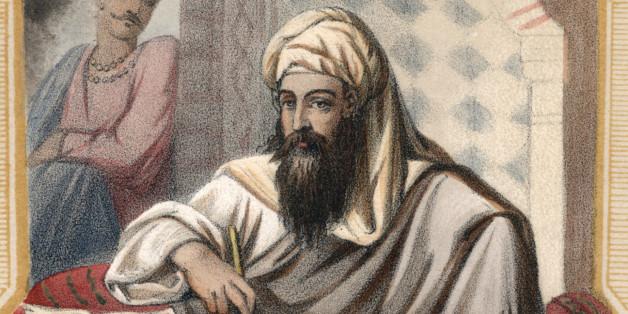
Prophet Muhammad: Life, Mission, and Legacy

juteralabs.com – Prophet Muhammad, the final prophet in Islam, stands as one of the most influential figures in the history of humanity. His life and message have shaped not only the Arabian Peninsula but also the entire world, leaving a profound legacy that continues to influence millions of people around the globe. Muhammad’s teachings, rooted in justice, compassion, and the oneness of God, have transcended time and place, making him a central figure in the lives of over a billion Muslims.

This article aims to provide a comprehensive look at the life, mission, and lasting impact of Prophet Muhammad, highlighting the key moments of his journey and the principles that guided his actions.

Early Life and Background

Birth and Family Background

Prophet Muhammad was born in 570 CE in the city of Mecca, located in present-day Saudi Arabia. He belonged to the Quraysh tribe, a respected and powerful tribe in the region. Muhammad’s father, Abdullah, passed away before he was born, and his mother, Amina, died when he was just six years old. This left Muhammad an orphan, and he was raised by his grandfather, Abdul Muttalib, and later by his uncle, Abu Talib.

Growing up in a relatively modest household, Muhammad experienced hardship early on but was known for his honesty, integrity, and gentle nature. These qualities earned him the nickname “Al-Amin,” meaning “The Trustworthy,” even as a young man. As he matured, Muhammad worked as a merchant and soon gained a reputation for fairness and reliability in business transactions.

Marriage to Khadijah

At the age of 25, Muhammad married Khadijah, a wealthy and respected widow who was 15 years older than him. Their marriage was one of deep mutual respect, love, and support. Khadijah was the first person to believe in Muhammad’s mission when he received his first revelation and became a key supporter of his prophetic journey. Their marriage remained strong until Khadijah’s passing in 619 CE, a year Muhammad referred to as the “Year of Sorrow.”

The Revelation and Beginning of Prophethood

The First Revelation

At the age of 40, Muhammad began to spend more time in contemplation and prayer, seeking solace from the social and moral corruption he witnessed in Mecca. One night, while meditating in the Cave of Hira on Mount Jabal al-Noor, he experienced the first revelation from the Angel Jibreel (Gabriel). The angel instructed him to “Read!” or “Recite!” and delivered the initial verses of the Qur’an, which marked the beginning of Muhammad’s prophethood.

The message he received was clear: there is only one God (Allah), and Muhammad was to be His messenger to guide humanity back to righteousness. Initially, Muhammad was filled with fear and uncertainty, but Khadijah provided him with comfort and reassurance. She believed in his divine calling and took him to a Christian scholar, Waraka ibn Nawfal, who affirmed that Muhammad had been chosen as a prophet.

Early Preaching and Opposition

Following the first revelation, Muhammad began to share the message of Islam with his close family and friends. His message was one of monotheism, calling people to worship the one true God and to live lives of justice, compassion, and morality. He also emphasized the importance of helping the poor, treating women with dignity, and upholding honesty and integrity in all dealings.

However, the Quraysh tribe, which controlled Mecca, saw Muhammad’s message as a direct challenge to their power and influence. Mecca was home to the Kaaba, a sacred site that housed numerous idols worshiped by various tribes. Muhammad’s call to abandon idolatry was perceived as a threat to the religious and economic status quo, and the leaders of the Quraysh began to persecute him and his followers.

The early Muslims faced ridicule, social ostracism, and even physical torture. Despite this, the number of followers continued to grow, and Muhammad’s message began to spread beyond Mecca.

The Migration to Medina (Hijra)

The Hijra: A Turning Point

In 622 CE, as the persecution of Muslims in Mecca intensified, Muhammad and his followers faced growing threats to their safety. In response to an invitation from the people of Yathrib (later renamed Medina), Muhammad and his followers made the Hijra, a migration from Mecca to Medina. This event marked a turning point in Islamic history and is considered the beginning of the Islamic calendar.

In Medina, Muhammad was not only a spiritual leader but also a political leader and a mediator between various tribal factions. The people of Medina welcomed him as a leader who could bring unity and justice to their city. Muhammad quickly established a covenant known as the Constitution of Medina, which set out the principles of coexistence and cooperation among the various communities, including Muslims, Jews, and other Arab tribes.

Establishment of the Muslim Community

In Medina, the Muslim community grew rapidly, both in numbers and in influence. The early Muslim community, known as the Ummah, was founded on principles of mutual support, social justice, and collective responsibility. The community was bound by common religious beliefs, but it also promoted tolerance and respect for others. Muhammad’s leadership in Medina helped to establish a strong sense of unity, and his teachings became the foundation for Islamic society.

The Battles of Badr, Uhud, and the Trench

During this time, Muhammad and his followers faced several military challenges. The Quraysh tribe in Mecca sought to suppress the growing Muslim community, leading to a series of battles:

  • The Battle of Badr (624 CE): The Muslims achieved a significant victory against the Quraysh, despite being outnumbered. This battle is often seen as a divine intervention, affirming Muhammad’s mission.
  • The Battle of Uhud (625 CE): The Muslims faced a setback in this battle, as a strategic mistake led to a loss. However, Muhammad and his followers remained resolute and continued their mission.
  • The Battle of the Trench (627 CE): The Quraysh attempted to invade Medina but were thwarted by the Muslims’ clever defense, including digging a trench around the city. This victory further solidified Muhammad’s position as a leader.

The Conquest of Mecca and Final Years

The Treaty of Hudaybiyyah

In 628 CE, Muhammad and his followers attempted to perform the pilgrimage to Mecca, but they were blocked by the Quraysh. This led to the Treaty of Hudaybiyyah, a peace agreement between the Muslims and the Quraysh. Although the treaty was initially seen as unfavorable to the Muslims, it allowed them to perform the pilgrimage in the following year and provided a period of peace during which Islam could spread more freely.

The Conquest of Mecca

In 630 CE, the Quraysh violated the treaty, and Muhammad gathered an army of 10,000 Muslims to march on Mecca. The city surrendered without significant bloodshed, and Muhammad entered Mecca victorious. One of his first actions was to cleanse the Kaaba of idols and restore it as a place of monotheistic worship to Allah. The conquest of Mecca marked the triumph of Islam in the Arabian Peninsula.

The Final Sermon

In the final year of his life, in 632 CE, Muhammad performed his last pilgrimage and delivered his Farewell Sermon to the assembled Muslims. In this sermon, he summarized the core principles of Islam, including the equality of all Muslims, the sanctity of human life, the importance of justice, and the duty to treat others with kindness and respect. He also emphasized the importance of following the Qur’an and his example in all aspects of life.

Legacy of Prophet Muhammad

The Qur’an and Hadith

Prophet Muhammad’s message was preserved in the Qur’an, the holy book of Islam, which Muslims believe to be the literal word of God revealed to Muhammad over a period of 23 years. The Qur’an provides guidance on all aspects of life, including worship, morality, law, and personal conduct.

In addition to the Qur’an, the Hadith—a collection of sayings and actions of the Prophet—serves as an essential source of guidance for Muslims. Together, the Qur’an and Hadith provide a comprehensive framework for Muslims to live a righteous life, rooted in faith and ethical principles.

The Spread of Islam

Following Muhammad’s death, Islam spread rapidly beyond the Arabian Peninsula, reaching regions such as North Africa, Spain, Persia, and Central Asia. The message of Islam, with its emphasis on social justice, equality, and the worship of one God, resonated with people of diverse backgrounds.

Today, Islam is one of the largest religions in the world, with over a billion followers. Muhammad’s teachings continue to inspire Muslims in their daily lives, providing a moral and spiritual foundation for personal conduct, community building, and social justice.

The Role of Muhammad in Islamic Thought

Muslims regard Prophet Muhammad as the “Seal of the Prophets”—the final messenger in a long line of prophets that includes figures such as Abraham, Moses, and Jesus. His life and actions serve as the ultimate example for Muslims to follow, and he is seen as the perfect model of human conduct. His compassion, humility, and devotion to God are qualities that Muslims strive to embody in their own lives.

Conclusion

Prophet Muhammad’s life and message have had a profound and lasting impact on the world. His teachings of monotheism, justice, mercy, and compassion continue to resonate with millions of people today. As the final prophet in Islam, Muhammad’s role in shaping both the spiritual and social dimensions of the Islamic faith has made him one of the most important figures in human history.

Through his actions, Muhammad demonstrated the importance of moral integrity, the value of social justice, and the power of compassion and forgiveness. His life is a source of inspiration for Muslims worldwide, and his legacy continues to guide individuals and communities in their quest for righteousness and spiritual fulfillment.

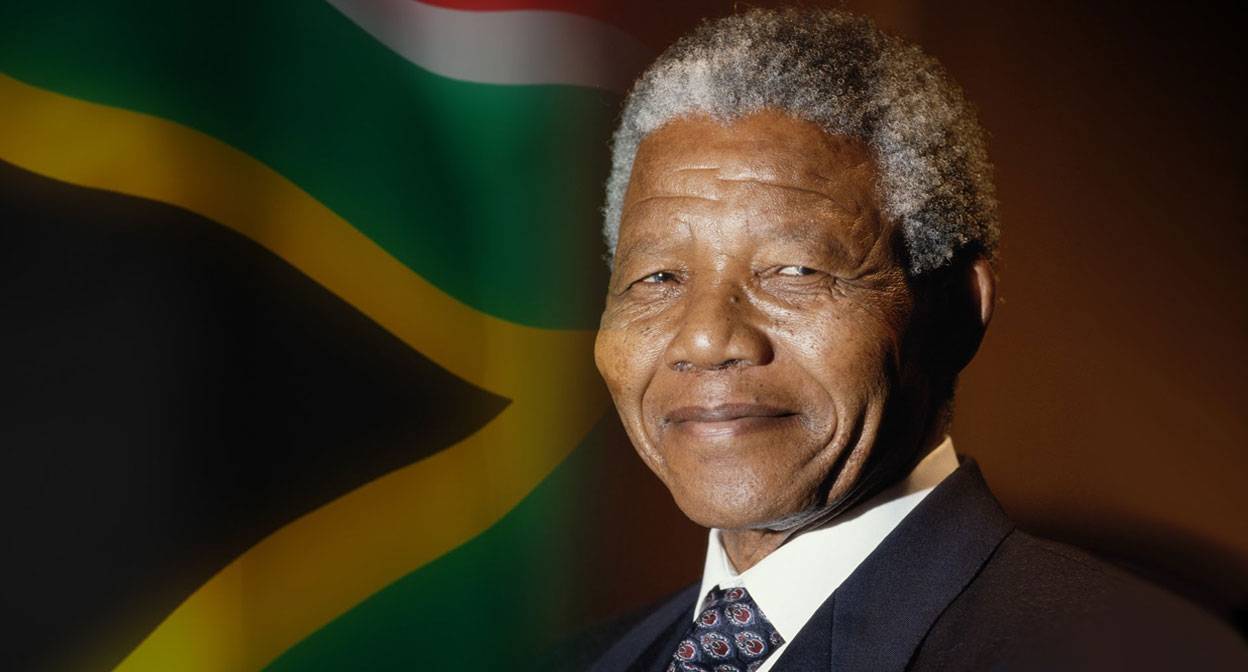
Nelson Mandela: A Life of Struggle and Triumph

juteralabs.com – Nelson Mandela is celebrated worldwide as a symbol of resistance to oppression, justice, and human dignity. As the first black president of South Africa, Mandela’s journey from anti-apartheid revolutionary to a global icon of peace and reconciliation left a profound impact on the world. His commitment to equality, freedom, and justice continues to inspire generations.

Early Life and Education

Birth and Family Background

Nelson Rolihlahla Mandela was born on July 18, 1918, in the village of Mvezo, in the Eastern Cape province of South Africa. He was born into the Thembu royal family, but his father, Gadla Henry Mphakanyiswa, was stripped of his chieftaincy, which led to Mandela’s early exposure to the struggles of his people. His mother, Nosekeni Fanny, was a strong figure in his life who emphasized the importance of education and spiritual guidance.

Education and Early Influences

Mandela attended local schools and later went to the prestigious Fort Hare University, where he encountered the first wave of political ideas that shaped his future activism. He was expelled from Fort Hare for participating in a student protest and subsequently moved to Johannesburg, where he completed his law degree at the University of Witwatersrand.

It was during his time in Johannesburg that Mandela became involved in political activism. He joined the African National Congress (ANC) and began working as a lawyer, using his skills to defend black South Africans against the discriminatory laws of the apartheid regime.

The Fight Against Apartheid

The Formation of the ANC Youth League

Mandela’s political awakening was solidified with his involvement in the African National Congress (ANC). In 1944, he helped form the ANC Youth League, an organization aimed at invigorating the struggle against apartheid. The league sought to unite all black South Africans in their fight for civil rights, and Mandela became increasingly committed to the cause of ending racial segregation.

Defiance Campaign and Rivonia Trial

In the 1940s and 1950s, Mandela played a leading role in the ANC’s struggle against the apartheid regime. He was involved in the Defiance Campaign of 1944, which aimed to defy apartheid laws through peaceful protests. In 1952, he became the National Volunteer-in-Chief of the ANC’s Defiance Campaign and was arrested several times for his activism.

In 1961, after years of peaceful resistance, Mandela took the step of supporting armed struggle when the ANC adopted the policy of armed resistance through its military wing, Umkhonto we Sizwe (MK). This decision led to his arrest in 1962 for charges of sabotage and conspiracy to overthrow the government.

The Rivonia Trial

In 1963, Mandela was arrested with several ANC leaders and charged with sabotage, treason, and other crimes at the infamous Rivonia Trial. He faced the possibility of the death penalty but delivered one of his most iconic speeches in defense of his actions. Mandela’s words during the trial reflected his unwavering commitment to justice, freedom, and equality:

“I have fought against white domination, and I have fought against black domination. I have cherished the ideal of a democratic and free society in which all persons live together in harmony and with equal opportunities. It is an ideal which I hope to live for and to achieve. But if needs be, it is an ideal for which I am prepared to die.”

Mandela was sentenced to life imprisonment and sent to the notorious Robben Island prison.

Life in Prison

Robben Island: A Symbol of Resistance

Mandela spent 18 of his 27 years in prison on Robben Island, a small, isolated island off the coast of Cape Town. He was kept in harsh conditions, forced to work in a lime quarry and was denied adequate food and medical care. Despite the grueling conditions, Mandela and his fellow prisoners remained committed to their cause, maintaining their dignity and morale.

During his imprisonment, Mandela became the global symbol of the anti-apartheid struggle. His unwavering resolve to fight for justice, even while incarcerated, inspired millions of people around the world to join the fight against apartheid.

International Campaign for Mandela’s Release

As Mandela’s imprisonment stretched on, the global movement for his release gained momentum. International campaigns, such as the boycott of South African goods and sanctions against the apartheid regime, put pressure on the South African government. The call for Mandela’s release became a rallying cry for human rights activists, leaders, and organizations worldwide.

Mandela’s reputation as a symbol of resistance to tyranny only grew as he spent more years in prison. The slogan “Free Nelson Mandela” became synonymous with the global struggle for racial equality and human rights.

Transition to Freedom and Presidency

The Release from Prison

On February 11, 1990, after intense international pressure, Nelson Mandela was finally released from prison. His release marked the beginning of the end for apartheid. The ruling National Party, realizing the inevitable fall of apartheid, initiated negotiations with Mandela and the ANC to transition to a democratic, multiracial society.

Mandela’s release was met with jubilation both within South Africa and around the world. He emerged as a hero, not only for his struggle against apartheid but for his ability to forgive his oppressors and work towards national reconciliation.

Negotiating the End of Apartheid

Mandela’s role in negotiating the peaceful transition from apartheid to democracy was crucial. He worked alongside President F.W. de Klerk, who had initiated reforms, to ensure a peaceful transition to democracy. The negotiations culminated in the country’s first multiracial elections in 1994, where Mandela was elected as South Africa’s first black president.

Mandela’s presidency symbolized the triumph of hope and unity over hatred and division. He championed policies of reconciliation, justice, and social equality. He focused on addressing the systemic inequalities faced by black South Africans, but also worked to heal the wounds of the nation by promoting national unity.

A Leader of Peace and Reconciliation

One of Mandela’s key accomplishments as president was his ability to unite a deeply divided nation. He forgave many of those who had been responsible for his imprisonment and the oppression of black South Africans. His leadership style emphasized dialogue and forgiveness rather than revenge, and he advocated for a “Truth and Reconciliation Commission” to heal the wounds of apartheid.

Mandela’s leadership was instrumental in preventing civil war and ensuring a peaceful transition into a new era for South Africa. His focus on peace and social justice earned him the Nobel Peace Prize in 1993, which he shared with F.W. de Klerk.

Legacy and Global Impact

Championing Human Rights

After stepping down from the presidency in 1999, Mandela continued his work as an advocate for peace and human rights. He established the Nelson Mandela Foundation to promote global peace, human rights, and development. His efforts in raising awareness about HIV/AIDS, his involvement in global peace negotiations, and his unwavering commitment to justice earned him respect worldwide.

Mandela’s legacy transcends his time in office. He inspired countless individuals and movements, from civil rights activists in the United States to freedom fighters in other parts of the world. His values of reconciliation, peace, and justice continue to guide global leaders and activists.

Global Icon of Peace and Equality

Nelson Mandela’s life became a beacon of hope for those oppressed by injustice and inequality. His ability to overcome adversity, embrace forgiveness, and work towards the common good made him an icon not just in South Africa, but around the world. He showed that a single individual, armed with conviction and a commitment to justice, could change the course of history.

The Legacy of Madiba

Mandela, affectionately known as Madiba (his clan name), passed away on December 5, 2013, at the age of 95. His death marked the end of an era, but his legacy lives on. His life story continues to inspire people of all backgrounds to fight for justice, equality, and human dignity.

Conclusion

Nelson Mandela’s life was a testament to the power of resilience, forgiveness, and the unwavering belief in the possibility of a better world. His fight against apartheid and his subsequent leadership as president of South Africa demonstrated the transformative power of reconciliation and justice. His legacy will continue to inspire individuals and movements committed to the pursuit of freedom and equality for generations to come.