
Harry S. Truman: Presidential Leadership in a Turbulent Time

juteralabs.com – When Harry S. Truman assumed the presidency in April 1945, he inherited a world in crisis. The world was still entrenched in the chaos of World War II, a conflict that had already claimed millions of lives, reshaped nations, and altered the course of history. Yet, Truman’s leadership would define not just the end of the war but also the beginning of a new era in global politics, foreign relations, and civil rights. His presidency was marked by critical decisions that shaped the modern world, cementing his place as one of the most influential, though sometimes underestimated, leaders in U.S. history.

The Transition to Power: A President in the Shadow of FDR

Truman’s rise to the presidency was both sudden and unexpected. He was a relatively unknown vice president when President Franklin D. Roosevelt died unexpectedly in April 1945. Roosevelt had led the United States through the Great Depression and most of World War II, leaving Truman to carry on his legacy during the war’s final, most crucial stages. Few had expected Truman to become president, and even fewer knew the full weight of the decisions that awaited him.

Suddenly thrust into the role of commander-in-chief, Truman had to navigate the complexities of a world at war. At the same time, the future of the United States—and the globe—was hanging in the balance. Roosevelt’s death left Truman facing challenges that no one could have predicted, including the decision of how to bring an end to a war that seemed far from over, and how to prepare for the future of U.S. foreign policy in the post-war world.

Leading the End of World War II

When Truman took office, the war in Europe was nearing its conclusion, but Japan had not yet surrendered. The Pacific Theater was still engulfed in fierce fighting, and Truman’s primary goal was to find a way to end the conflict swiftly and decisively. Truman’s leadership during this time was marked by difficult decisions, none more profound than his authorization to use atomic bombs on the Japanese cities of Hiroshima and Nagasaki.

The decision to use atomic weapons has been the subject of extensive debate and controversy over the years. Truman, however, defended his decision as necessary to end the war and save lives. The alternative to using the atomic bomb was a costly invasion of Japan, which could have resulted in staggering American casualties and prolonged the war for months. By the time Japan finally surrendered in August 1945, Truman had helped bring an end to the deadliest war in history, though at a tremendous moral cost.

Shaping the Post-War World: The United Nations and the Cold War

Once World War II had ended, Truman’s leadership turned to shaping the post-war world. The United States emerged from the conflict as the world’s leading superpower, and Truman quickly recognized the need for international cooperation to prevent future wars and ensure global stability. One of his most significant achievements during this time was his involvement in the creation of the United Nations (UN), an international body aimed at promoting peace and cooperation between nations. Truman believed that the United States needed to take an active role in world affairs to prevent another catastrophic conflict.

Truman’s leadership also faced a dramatic shift as tensions with the Soviet Union began to escalate, leading to the Cold War. The division of Europe into Soviet-controlled Eastern bloc countries and Western democracies led by the United States would dominate global politics for the next several decades. Truman’s policy of containment, aimed at preventing the spread of communism, became the cornerstone of U.S. foreign policy. The Truman Doctrine of 1947, which pledged U.S. support for nations resisting communism, and the Marshall Plan, which provided financial assistance to rebuild Western Europe, were pivotal in shaping the direction of U.S. foreign policy for the duration of the Cold War.

Domestic Leadership: The Fair Deal and Civil Rights

While Truman’s foreign policy decisions were critical, his domestic leadership was equally important. Truman inherited a nation that had undergone massive changes during the war, and he faced the task of managing the transition to a peacetime economy. One of his major domestic initiatives was his Fair Deal program, which aimed to expand on Roosevelt’s New Deal policies by promoting social reforms such as universal healthcare, civil rights protections, and increasing the minimum wage.

Truman’s Fair Deal faced considerable opposition, especially from conservative lawmakers, but he was determined to address pressing social issues, such as poverty, racial discrimination, and inequality. While many of his domestic initiatives were stymied by Congress, Truman’s push for civil rights reform had lasting effects. In 1948, he took a significant step by desegregating the U.S. military through Executive Order 9981, making the armed forces more inclusive for African American soldiers. Truman also established the President’s Committee on Civil Rights, which called for federal action to address issues of racial discrimination and inequality in the United States.

Challenges and Controversies

No presidential term is without its challenges, and Truman’s was no exception. His decision to recognize the state of Israel in 1948, despite opposition from some in his own party, marked another pivotal moment in his presidency. It was a decision that would have long-lasting implications for U.S. foreign policy in the Middle East, and one that would prove to be highly controversial in the years to come.

Truman also faced political opposition on the domestic front, with his approval ratings dipping during his presidency due to economic struggles and labor strikes. He found himself battling both the Republicans and certain factions of his own Democratic Party, especially during the election of 1948. Truman’s approval ratings were at an all-time low, and he was expected to lose the election. However, in one of the most famous political upsets in U.S. history, Truman defeated Thomas E. Dewey to win a second term. His victory was a testament to his perseverance and his ability to connect with ordinary Americans.

Truman’s Enduring Legacy

Today, historians and political analysts view Truman as one of the most effective presidents in American history. Though he faced unprecedented challenges, from the end of World War II to the early years of the Cold War, his leadership proved to be decisive in shaping the post-war world order. His foreign policy initiatives, especially in containing the spread of communism and promoting democracy and economic recovery, laid the foundation for much of U.S. international relations in the second half of the 20th century.

Domestically, Truman’s efforts to tackle racial discrimination and promote economic fairness were crucial steps forward in the civil rights movement and the fight for equality. While his Fair Deal was only partially successful, it pushed important social reforms that would later be realized in the 1960s and beyond.

Truman’s presidency reminds us that leadership often requires boldness, a willingness to make difficult decisions, and the courage to face criticism. His legacy, while shaped by some difficult choices, is one of significant progress both at home and abroad.

Conclusion: A Legacy of Leadership

At juteralabs.com, we reflect on the legacy of Harry S. Truman as one of the most consequential U.S. presidents. He steered the nation through a tumultuous period in history, from the end of World War II to the dawn of the Cold War, making decisions that would shape the future of the United States and the world. Truman’s presidency was marked by his pragmatic leadership, his commitment to democratic values, and his determination to tackle both international and domestic challenges head-on. Despite the turbulence of his time, Truman’s ability to lead with conviction and vision solidified his place as a pivotal figure in American history.
Joe Biden’s Foreign Policy Experience: Global Leadership

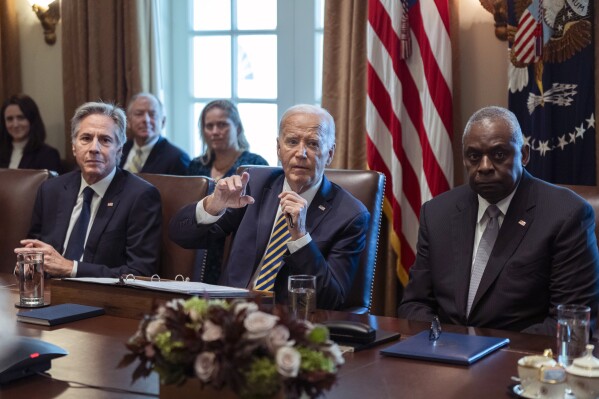
juteralabs.com – Joe Biden, the 46th President of the United States, has an extensive and storied career in foreign policy that spans over five decades. His experience as a U.S. Senator, Vice President under President Barack Obama, and now as President himself, has shaped his approach to international relations, security, diplomacy, and multilateral cooperation. Biden’s foreign policy expertise is informed by his deep understanding of global issues, his diplomatic engagement with world leaders, and his commitment to advancing U.S. interests while promoting peace, human rights, and democracy worldwide.

Biden’s foreign policy experience is rooted in his belief in the power of diplomacy, multilateralism, and strong alliances. Throughout his career, he has navigated some of the most significant challenges in U.S. foreign relations, from the wars in Iraq and Afghanistan to the rise of China as a global power. His approach to foreign policy has been marked by pragmatism, a commitment to engagement, and an understanding of the complexities of global geopolitics.

In this article, we explore Joe Biden’s extensive foreign policy experience, from his time in the Senate to his leadership as Vice President and now as President of the United States. We also examine the key themes and strategies that have defined Biden’s approach to international relations, including his advocacy for diplomacy, his commitment to alliances, and his focus on global security challenges.

Joe Biden’s Early Foreign Policy Experience in the U.S. Senate

Before becoming Vice President, Biden served as a U.S. Senator from Delaware for 36 years. During this time, he was deeply involved in foreign policy and national security issues, both as a member of the Senate Foreign Relations Committee and as its chairman. His time in the Senate was defined by his commitment to shaping U.S. foreign policy, advocating for human rights, and addressing global security challenges.

1. Chairmanship of the Senate Foreign Relations Committee

Biden’s leadership in the Senate Foreign Relations Committee was one of the cornerstones of his foreign policy career. As Chairman from 2001 to 2003 and again from 2007 to 2009, Biden played a critical role in shaping key foreign policy initiatives, particularly in relation to the Middle East, Europe, and Latin America. His work on the committee included advocating for diplomatic engagement, international cooperation, and the promotion of democratic values around the world.

In particular, Biden was instrumental in shaping U.S. foreign policy during the wars in Iraq and Afghanistan, which dominated the early 21st century. His advocacy for a diplomatic resolution to the Iraq War, as well as his support for military engagement in Afghanistan to fight terrorism, highlighted his nuanced approach to complex foreign policy issues.

2. Advocating for Human Rights and Democracy

Throughout his Senate career, Biden was a strong advocate for human rights and democratic values. He championed U.S. support for democratic movements and human rights defenders in countries around the world. His work focused on curbing authoritarianism, protecting religious freedom, and promoting freedom of expression.

Biden was also a key figure in advocating for U.S. foreign aid and international programs that supported democracy-building efforts and poverty alleviation. He played a role in passing legislation that supported the U.S. role in promoting global health, humanitarian aid, and conflict resolution.

Joe Biden’s Foreign Policy as Vice President

Biden’s foreign policy experience as Vice President under President Barack Obama was a pivotal period in his career. Serving as Obama’s chief advisor on foreign affairs, Biden played a key role in shaping the U.S. response to global crises, engaging in high-level diplomacy, and strengthening alliances around the world. His leadership in a range of international issues—from nuclear disarmament to counterterrorism—defined the Obama administration’s foreign policy legacy.

1. The Iran Nuclear Deal (Joint Comprehensive Plan of Action)

One of the defining achievements of Biden’s foreign policy tenure as Vice President was his involvement in the negotiation of the Iran Nuclear Deal, also known as the Joint Comprehensive Plan of Action (JCPOA). The deal, reached in 2015, was a diplomatic breakthrough that aimed to curb Iran’s nuclear program in exchange for sanctions relief. Biden played a central role in supporting President Obama’s push for a multilateral diplomatic solution to prevent Iran from obtaining nuclear weapons.

The Iran Nuclear Deal was praised by many as a model of diplomacy and international cooperation. Biden’s role in the negotiations highlighted his belief in the power of engagement and diplomacy over military confrontation. Despite its eventual unraveling during the Trump administration, Biden’s involvement in the JCPOA remains a hallmark of his foreign policy legacy.

2. The Withdrawal from Iraq and Afghanistan

Biden was a strong advocate for ending the U.S. military presence in Iraq and Afghanistan. His experience in navigating the complex dynamics of both wars gave him a unique perspective on the need to prioritize diplomacy and peacebuilding. Biden advocated for a responsible withdrawal of U.S. forces from Iraq, which occurred in 2011, and he was instrumental in overseeing the U.S. troop surge in Afghanistan in 2009.

Biden’s focus on diplomacy, as well as his commitment to rebuilding nations after conflict, shaped the Obama administration’s approach to both Iraq and Afghanistan. His leadership in pushing for a gradual reduction of U.S. military involvement in these countries was part of a broader vision to reduce U.S. military presence abroad while still supporting the stability of these nations through diplomatic and economic assistance.

3. Global Climate Change and International Cooperation

Biden’s time as Vice President was also marked by a strong commitment to addressing global climate change. As a key advocate for the Paris Agreement on climate change, Biden worked to ensure that the U.S. remained engaged in global efforts to combat climate change and reduce greenhouse gas emissions. His leadership in this area underscored his belief in multilateralism and the importance of international cooperation to tackle global challenges.

Biden’s commitment to addressing climate change as a foreign policy priority was a central theme during his vice presidency. He worked closely with world leaders to ensure that the U.S. played an active role in climate negotiations and that the country adhered to international agreements aimed at mitigating the effects of climate change.

Joe Biden’s Foreign Policy as President

As President of the United States, Joe Biden has continued to prioritize diplomacy, multilateralism, and the protection of democratic values on the world stage. His administration’s foreign policy is focused on rebuilding alliances, reasserting U.S. leadership, and addressing global challenges such as climate change, the COVID-19 pandemic, and the rise of authoritarianism.

1. Rebuilding U.S. Alliances and Multilateral Engagement

One of Biden’s key priorities as President has been to restore U.S. relationships with traditional allies, particularly NATO and European partners. After years of tension under the Trump administration, Biden has worked to reaffirm the U.S.’s commitment to its allies and has emphasized the importance of working through multilateral organizations like the United Nations, the World Health Organization, and the G7.

Biden’s diplomatic approach to foreign policy has been centered around building stronger partnerships with democratic nations and confronting global challenges through collective action. His “America is back” message underscores his belief that the U.S. should play a leading role in shaping global affairs, promoting peace, and advancing human rights.

2. Confronting Global Threats and Security Challenges

Biden’s foreign policy is also focused on addressing security threats such as the rise of China, Russia’s aggressive actions, and the ongoing challenges posed by terrorism. Biden has taken a firm stance on defending human rights, countering cyber threats, and addressing the security implications of China’s growing influence in Asia and beyond.

Biden’s administration has taken steps to strengthen military alliances in the Pacific, including with Japan, South Korea, and Australia, while also bolstering U.S. support for NATO’s defense of Eastern Europe in response to Russia’s actions in Ukraine and other regions. Biden has also continued the U.S. commitment to counterterrorism, particularly in the Middle East and Africa, while emphasizing the importance of working with international partners to combat extremism.

3. Advancing Global Health and Climate Action

In addition to his focus on security, Biden has placed a strong emphasis on global health and climate action. His administration has made significant efforts to rejoin the Paris Climate Agreement and has committed to taking bold steps to address climate change through international cooperation. Biden’s leadership in the global response to the COVID-19 pandemic, including supporting vaccine distribution and providing economic aid to affected nations, underscores his commitment to promoting global health and security.

Conclusion

Joe Biden’s foreign policy experience has been shaped by his decades of leadership in the U.S. Senate, his role as Vice President, and his current presidency. His approach to foreign policy is grounded in diplomacy, multilateralism, and the belief that the United States must work in partnership with other nations to address global challenges and promote peace. Throughout his career, Biden has demonstrated a deep commitment to advancing U.S. interests while championing human rights, democracy, and international cooperation.

As President, Biden’s foreign policy has emphasized rebuilding alliances, confronting security threats, and addressing issues like climate change and global health. His extensive foreign policy experience has shaped his leadership and continues to influence his approach to global diplomacy as he navigates the complexities of international relations in the 21st century.

Governance and Leadership: Kiribati’s Political System

juteralabs.com – Kiribati, a republic in the central Pacific Ocean, has a unique political system that reflects its cultural heritage and historical experiences. This article delves into the governance structure and leadership dynamics within Kiribati, providing an overview of its political landscape.

The Constitution and Government Structure

The foundation of Kiribati’s political system is its constitution, which was enacted at the time of independence in 1979. The constitution establishes Kiribati as a sovereign democratic republic, with a government structure that combines elements of traditional governance and modern democratic principles.

The government of Kiribati is divided into three branches: the executive, the legislative, and the judicial. This separation of powers ensures a balanced system of governance, with each branch having distinct roles and responsibilities.

The Executive Branch

The executive branch is headed by the President of Kiribati, who is both the head of state and the head of government. The President is elected by an electoral college, which consists of members of the House of Assembly and representatives from the outer islands. The President serves a four-year term and is limited to two consecutive terms.

The President appoints a Cabinet, which includes ministers responsible for various government departments. The Cabinet is accountable to the President and plays a crucial role in the formulation and implementation of government policies.

The Legislative Branch

The legislative branch is composed of the House of Assembly, Kiribati’s unicameral parliament. The House of Assembly consists of 45 members, who are elected through a unique electoral system that combines single-member constituencies and multi-member constituencies. Members serve four-year terms.

The House of Assembly is responsible for enacting laws, approving the national budget, and overseeing the executive branch. The Speaker of the House, elected by its members, presides over parliamentary sessions and ensures the smooth functioning of the legislative process.

The Judicial Branch

The judicial branch is independent of the executive and legislative branches, ensuring the rule of law and the protection of individual rights. The court system in Kiribati includes the High Court, the Court of Appeal, and the Supreme Court. The Chief Justice, appointed by the President, heads the judiciary.

Traditional Governance and Modern Politics

Kiribati’s political system also incorporates elements of traditional governance, known as “maneaba” culture. The maneaba is a traditional meeting house where community decisions are made through consensus. This model of inclusive decision-making influences modern political processes, promoting dialogue and consensus-building among political leaders and citizens.

Leadership and Political Dynamics

Leadership in Kiribati is characterized by a blend of traditional authority and modern political acumen. Political leaders often draw on their understanding of Kiribati’s cultural values and social norms to navigate political challenges and foster national unity.

Political parties in Kiribati are relatively fluid, with alliances and coalitions forming and dissolving based on political expediency and shared policy objectives. This dynamic political landscape reflects the adaptability and resilience of Kiribati’s political system.

Conclusion

Kiribati’s political system is a testament to the nation’s ability to blend traditional governance with modern democratic principles. The constitution, government structure, and leadership dynamics reflect a commitment to democratic values, while also honoring the cultural heritage of the Kiribati people. As Kiribati continues to evolve, its political system will play a crucial role in shaping the nation’s future, ensuring stability, and promoting the well-being of its citizens.